
Bike Touring South Korea
We have spent a total of 17 days biking in South Korea, averaging about 50 miles each day. The cycling infrastructure in Korea is pretty good, and the bicycle passport system is pure genius.
Cycling is clearly a popular sport here, as there are many bikers using the paths in the cities and a healthy number even in the sticks. We see mountain bikes and e-bikes aplenty. We don’t actually see the bikers themselves since every inch of their bodies are covered (seriously—long pants, long sleeves, full fingered gloves, sunglasses and buffs/face masks). They look like ninjas and are super kitted out in matching everything. Though we can’t see their expressions, we’ve gotten many thumbs up and several snacks (Gatorade, protein bars, coffee drinks, red bean pastries, puff milk snacks, and a tangerine).
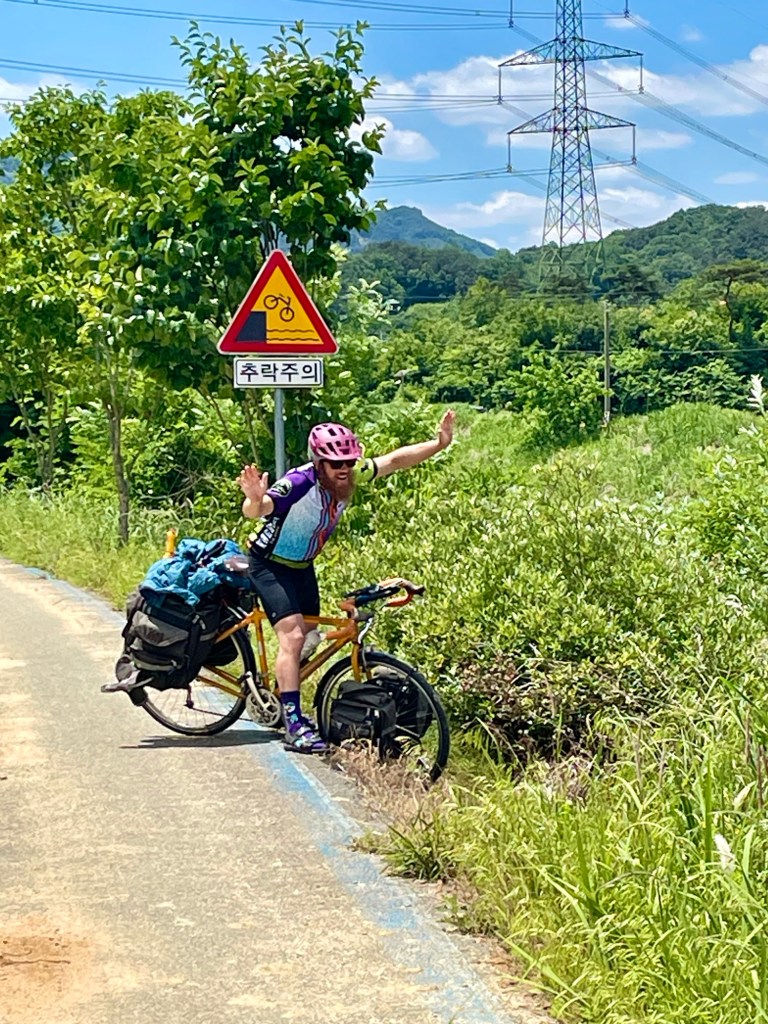
We’ve seen a handful of international cycling tourists and even talked to a couple, but we were expecting far more along the 4 Rivers Trail or on Jeju island, especially. The cycling infrastructure is so well developed (particularly between Seoul and Busan) that we thought we’d see more foreign tourists.
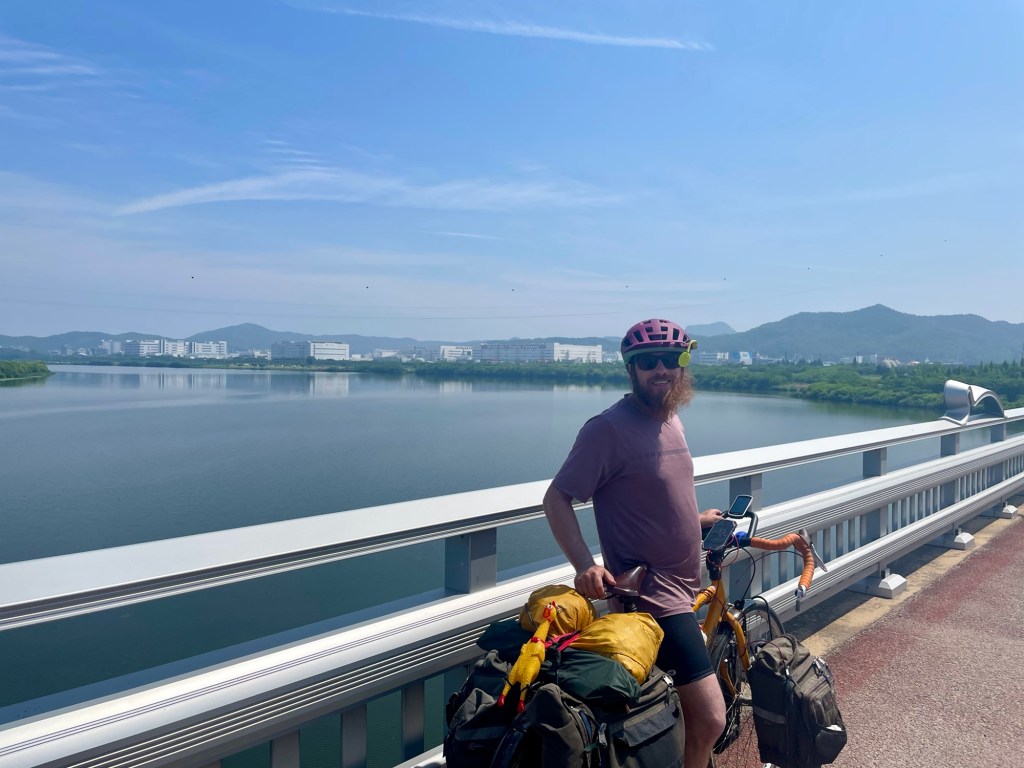
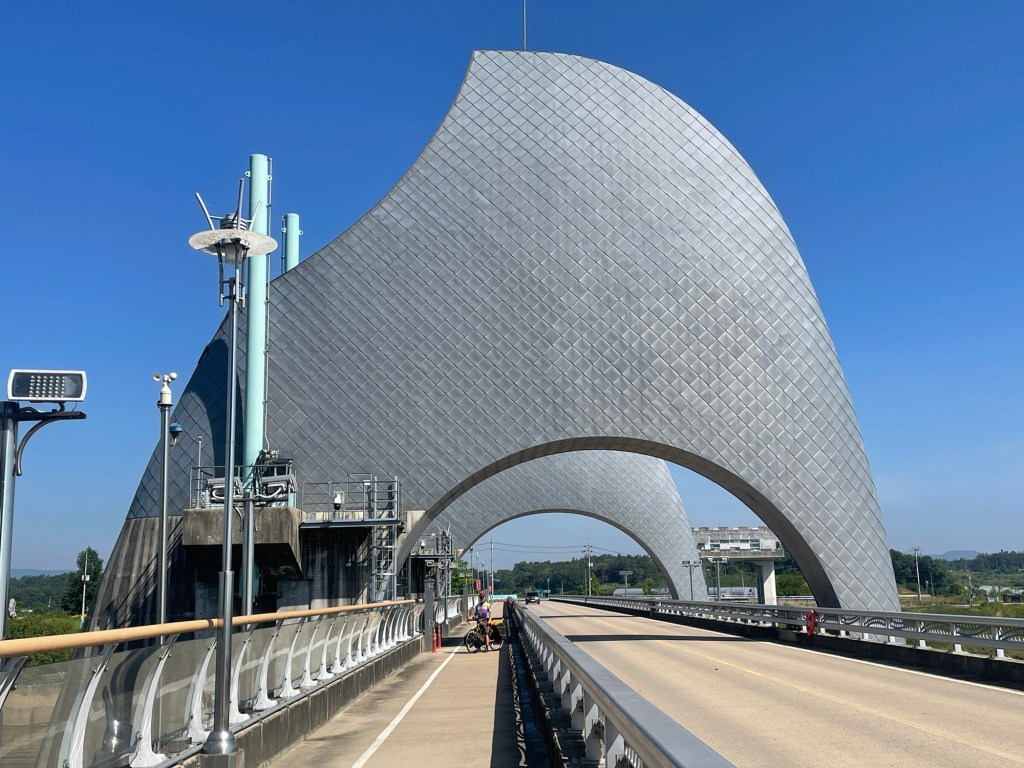
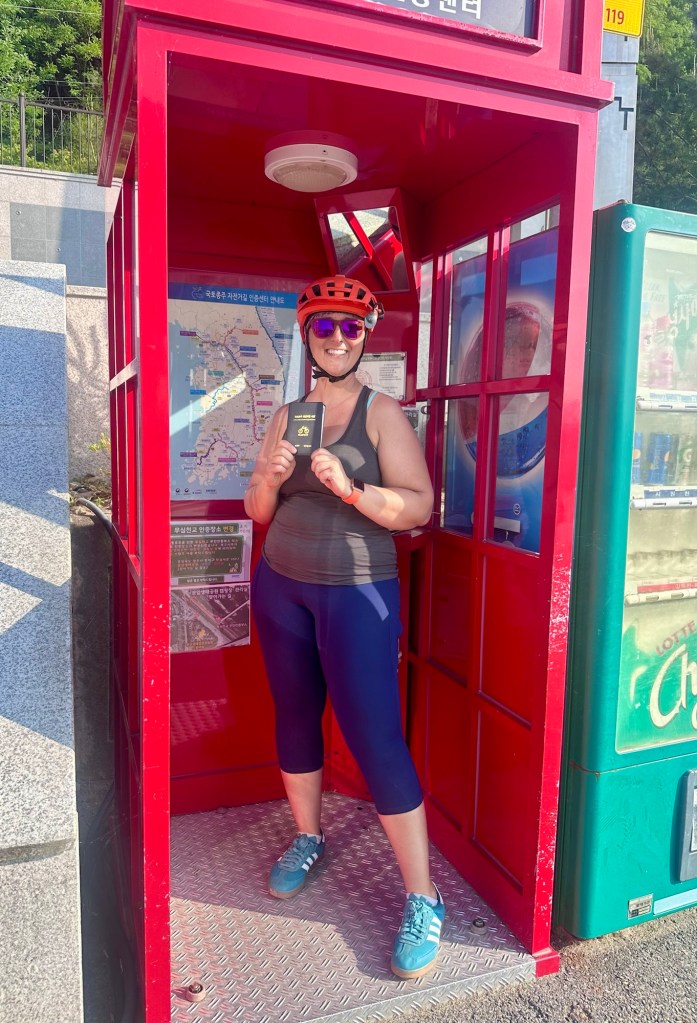
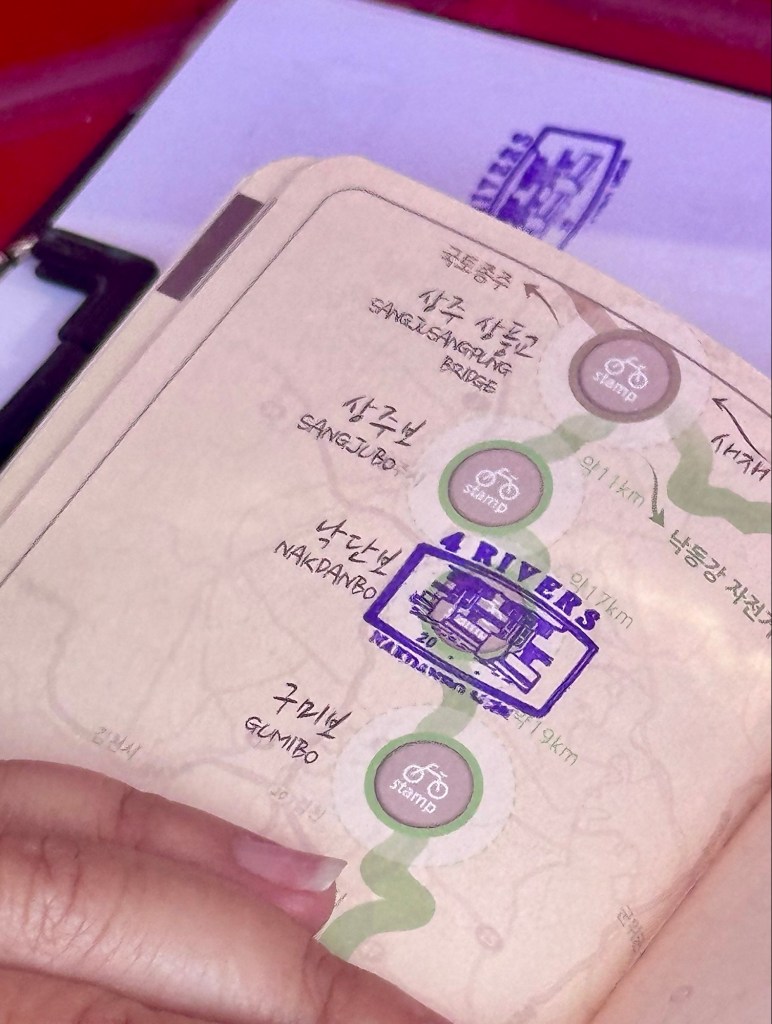
Korea’s Bicycle Passport is a truly ingenious system. For $3.26 cyclists can purchase a good-quality passport book in which to collect stamps as they traverse the country’s 12 long-distance bicycle routes. The stamps are located at certification centers marked by red phone booths. Each phone booth has a unique stamp for that location, and each stamp has a specific space for it marked in the passport. The certification centers vary in distance from one another, but most are around 20km apart. Several, at least on the 4 Rivers Trail, are located at dams, which are always fascinating structures.
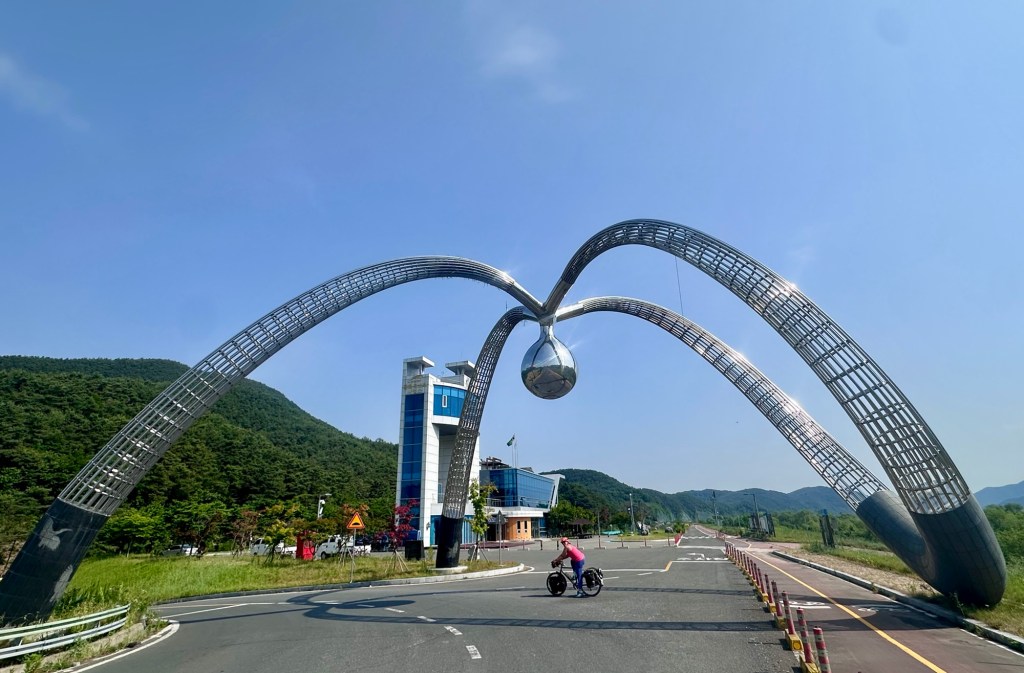
It took me a while to find a station selling the passport (not all of them do), but once I had that little blue book in hand, I was extra excited to reach each red phone booth. Even after I got the passport, I missed a couple of stations we passed (occasionally they are not signed well and are hidden slightly off course), but I’m happy to have collected 27 stamps. If I had my passport book all along, I would have collected 42 of the system’s 86 stamps from 6 of the 12 long-distance paths. It’s a great souvenir for a fantastic price!
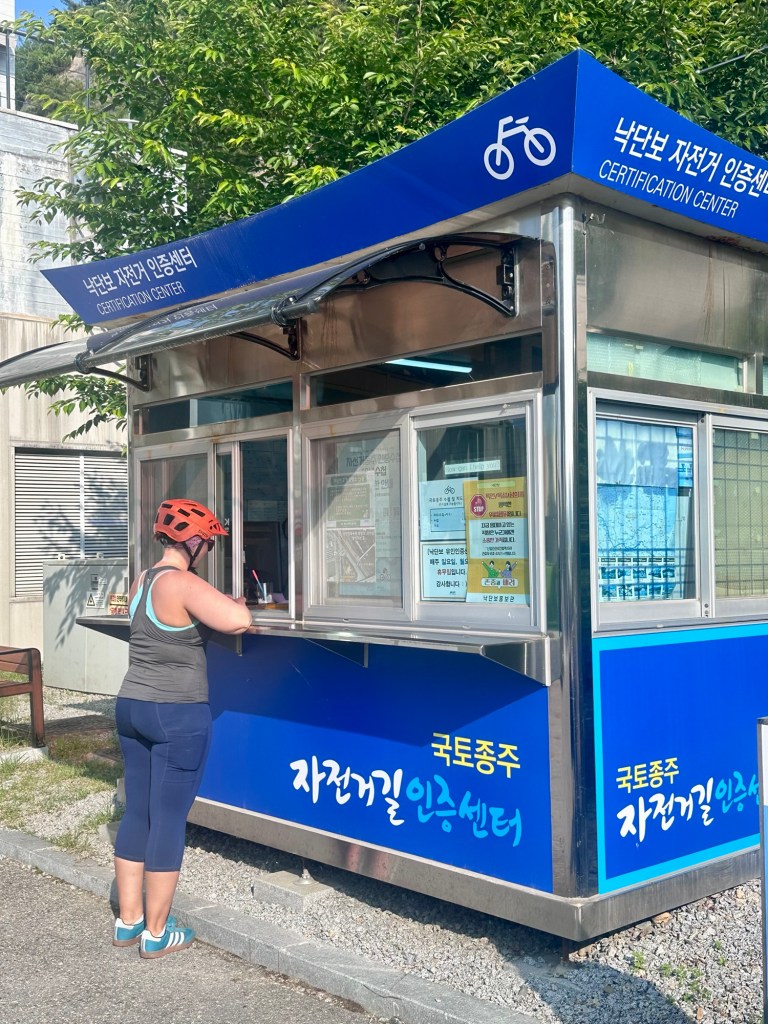
The bike paths themselves are well marked and easy to follow, especially since most weave alongside the rivers. Although there are frequent steep grades climbing up to bridges or dipping below an overpass, most are relatively short. There are definitely some sections that are truly challenging, though. We met one sustained climb over 1000 feet at a grade of 6-8% most of the way. We also found a few sections of several hundred feet that had grades in the teens (even up to 18%)! In my lowest gears, fully loaded (my bike weighs at least 70lbs.), I have had to get off and push my way up a number of hills. It brings me great satisfaction at other times to pedal through and sometimes pass regular cyclists who have gotten off to walk, though. I’ve even gotten a few cheers at the tops of hills.
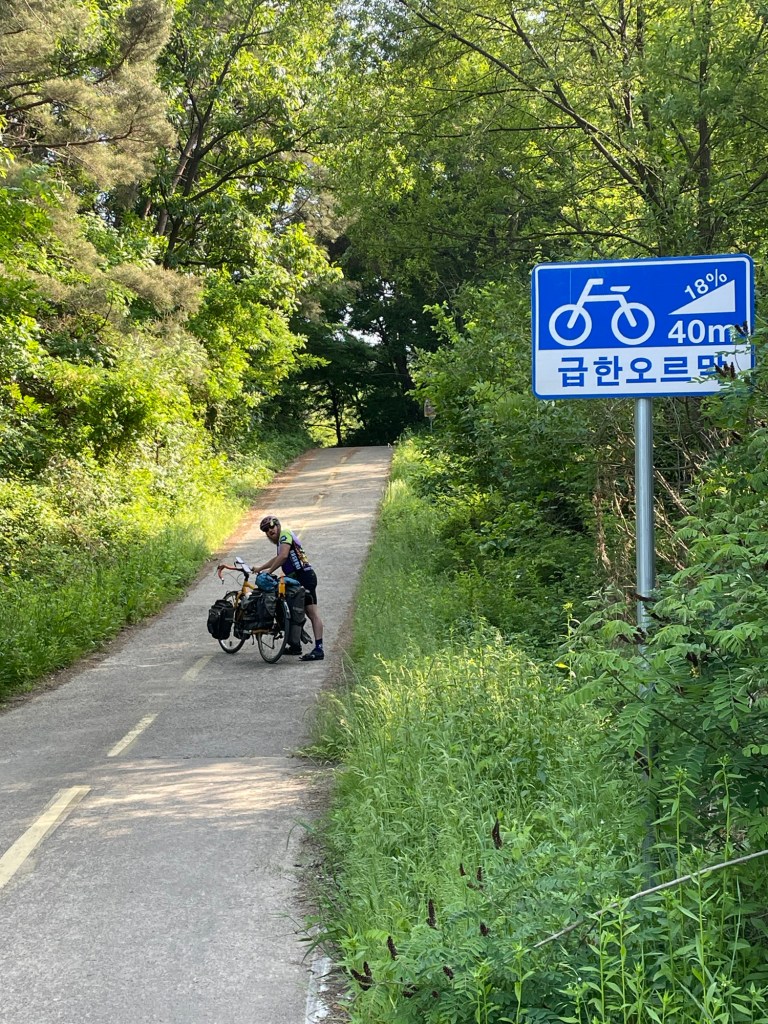
Many bike paths are completely separate from road traffic, but not all are, and we’ve also taken some of our own routes not on the biking circuit. Most drivers are courteous and give plenty of room, but Mike has kicked at least one car passing too close.
While the bike paths are usually nice and well-maintained, they are often across a river or otherwise isolated from the towns and cities. This can make it difficult to resupply without large detours. It’s nice that the bike infrastructure at least includes clean restrooms seemingly in the middle of nowhere, though.
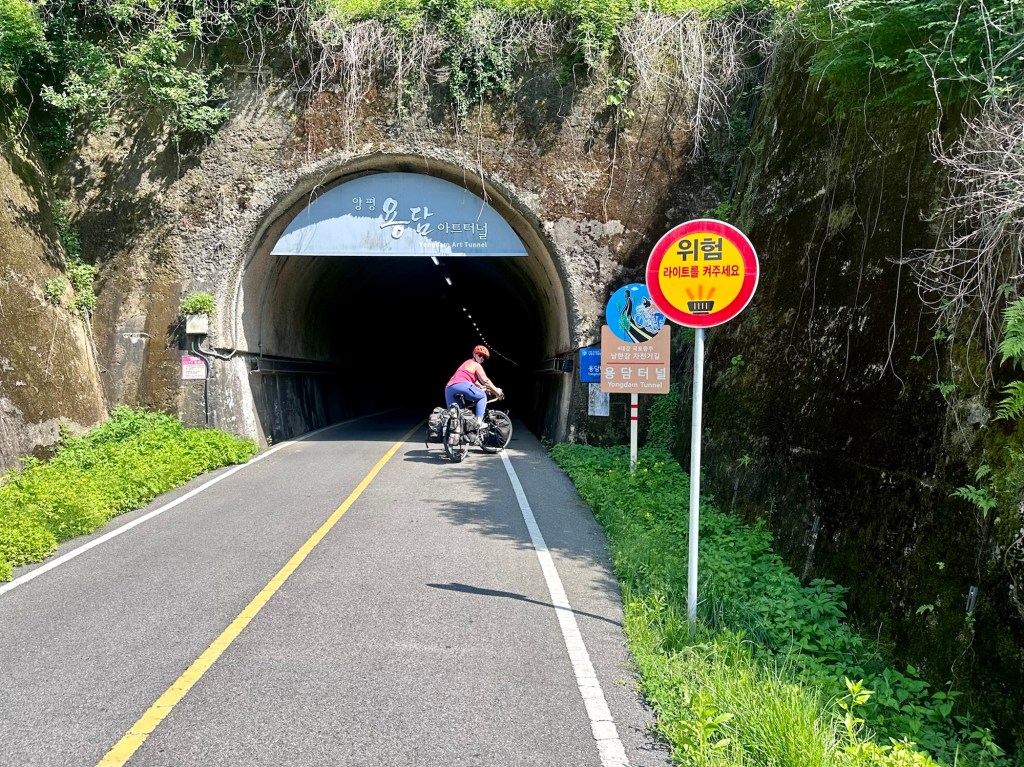
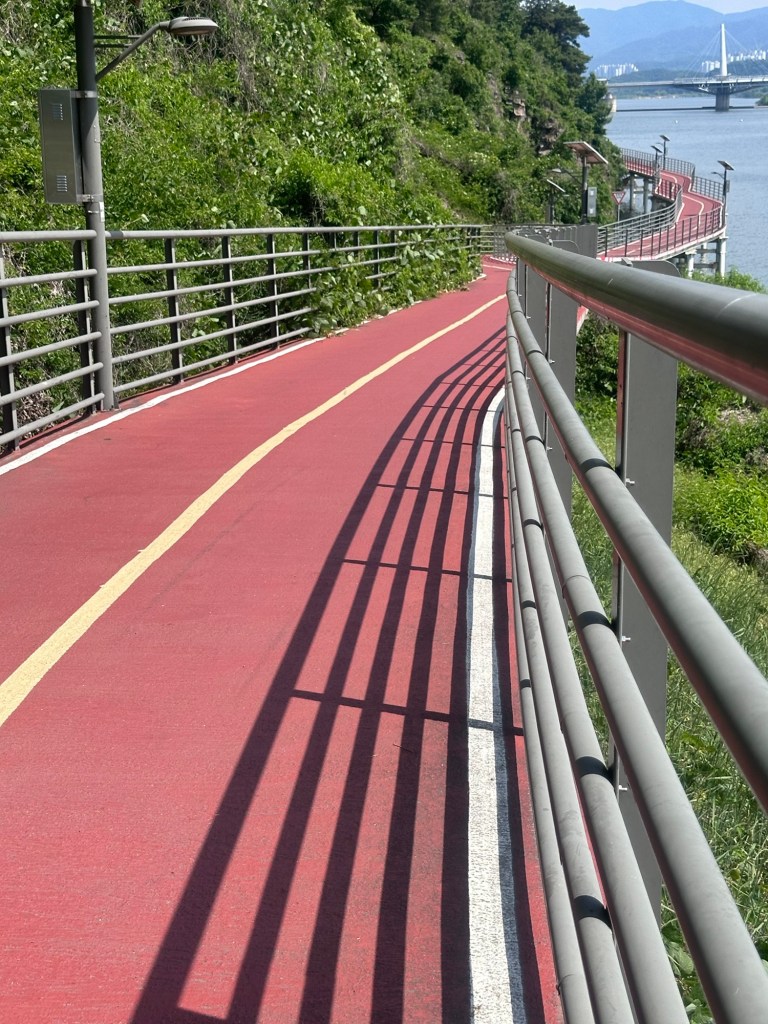
One other cool feature of the bike paths is the bicycle causeway. We’ve encountered several causeways that skirt around cliffs at the water’s edge. These are especially welcome since we would undoubtedly have a huge climb if they didn’t exist. They also offer some pretty cool views!
All in all, our South Korean bicycle tour has been a roaring success. If someone asked me where they should go for their first international tour, this would be high on my list. There are some challenges with supplies and language, but it’s pretty smooth sailing along the bike passport routes, and it’s just a great country to visit overall!

